What water-resistant shell specs define the best jewelry for travel cases?
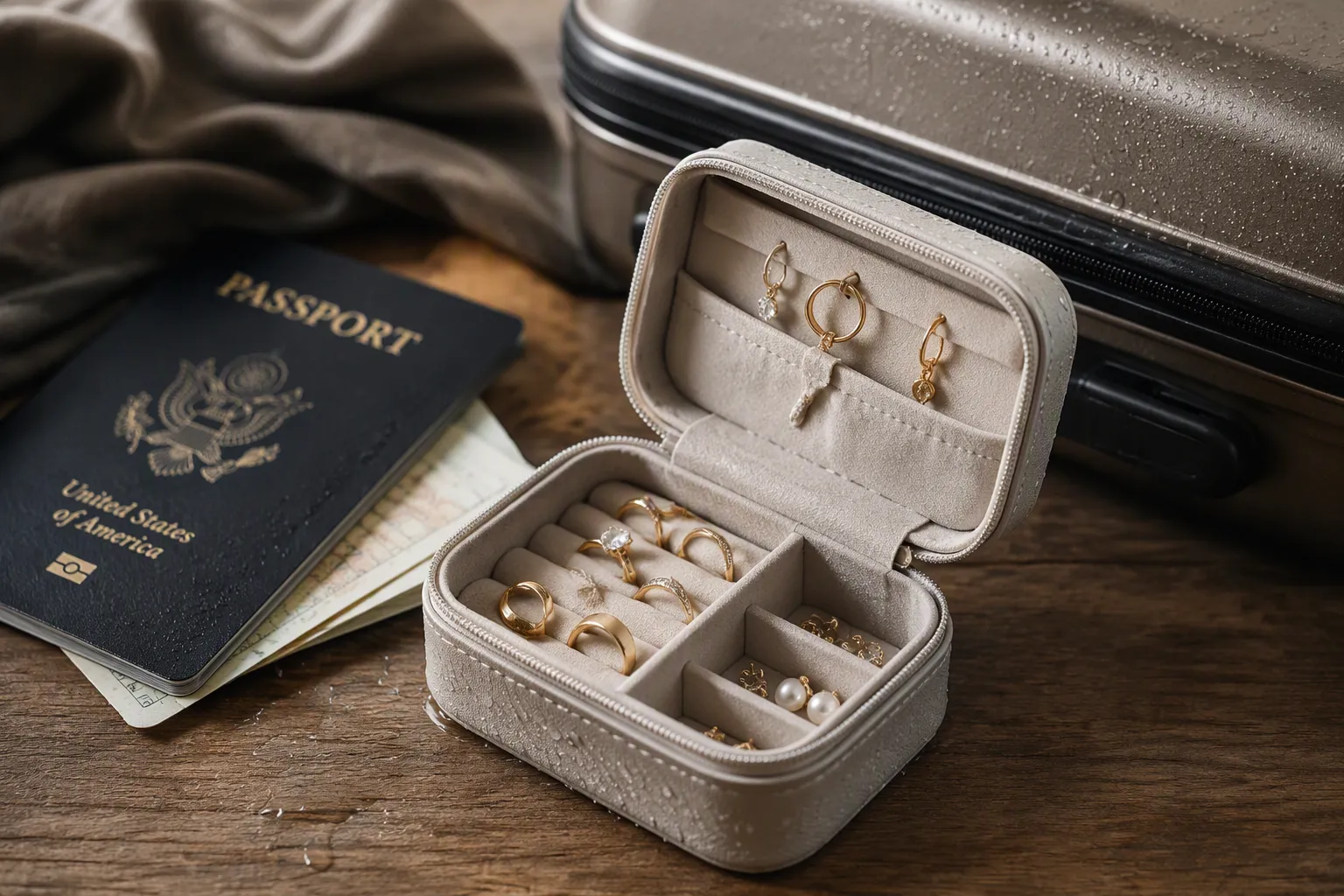
Three specs define a water-resistant jewelry case: the IP rating, the shell material, and the sealing mechanism. The IP rating tells a traveler how much moisture the case resists, from splashes to brief immersion. Shell material decides weight, durability, and how well the case blocks humidity that dulls metal and speeds tarnish. The seal keeps water, sand, and spills away from delicate pieces.
This guide compares options on technical performance, travel fit, compliance, and cost. Readers can then choose the best jewelry for travel with confidence. Tongxing Packaging supplies cases and pouches across these spec tiers, so the comparison stays fair rather than pushing one design.
Key Takeaways
Check the IP rating to know how much water your jewelry case can resist.
Choose a shell material that balances weight, durability, and moisture protection for your trip.
Inspect the seal for even fit and easy cleaning to keep water out.
Match the case size to your travel space and airline rules for convenience.
Pick a case that fits your wettest and roughest travel conditions, not just the price.
IP Ratings For Jewelry Cases
Reading IPX Numbers
The IP code comes from IEC 60529, a public standard for enclosure protection. The letters "IP" stand for ingress protection. The first digit rates protection against solid objects like dust. The second digit rates protection against water. Jewelry cases usually carry an IPX rating, where the "X" means the maker only claims water protection and skips the dust claim.
The second digit rises with severity. IPX0 means no water protection at all. IPX4 means the shell shrugs off splashes from any direction, such as rain or a spilled drink. IPX7 means the case survives temporary immersion in shallow water for a short, defined period. A higher digit signals a tougher seal, not a better case for every trip.
Matching Rating To Trip
Carry-on humidity calls for modest protection. A pouch rated IPX4 or a well-sealed soft shell handles damp air, condensation, and the occasional spill inside a bag. Beach trips raise the stakes. Sand, salt spray, and wet towels reward a case rated IPX7 or a hard shell with a gasketed lid.
Checked luggage faces pressure changes and rough handling. A structured case with a solid latch and a rated seal suits this leg of the journey best. Day trips and short hops need little more than splash resistance. Travelers should match the digit to the wettest condition they expect, then weigh weight and cost against that need.
Shell Materials For The Best Jewelry For Travel
Plastic, Metal, And Silicone Compared
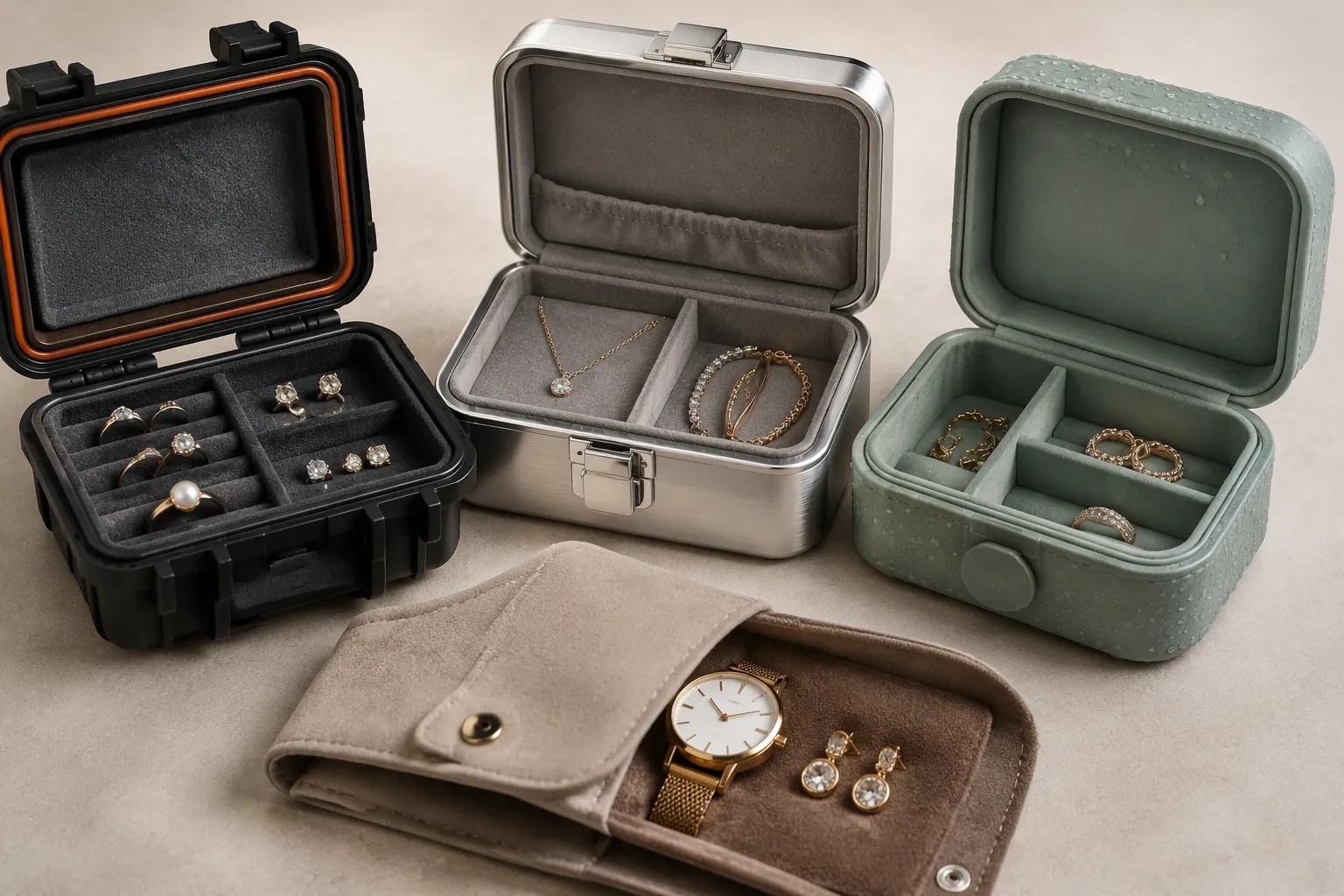
The shell material affects three things at once: water resistance, weight, and durability. Polycarbonate is a stiff plastic. It handles impact well, stays light, and shapes easily around a lid with a gasket. How well it keeps water out depends on the seal, not the plastic. Aluminum is stronger and stiffer. A metal shell keeps its shape under pressure in checked luggage, and it takes a tight compression fit. It weighs more than plastic and can dent at thin corners. Silicone is flexible and soft. It sheds splashes and grips surfaces well, but it bends under load, so it guards against moisture better than it guards against crushing.
Material | Water resistance | Weight | Durability | Best fit |
|---|---|---|---|---|
Polycarbonate | Good with a gasket | Light | Resists impact | Carry-on and everyday cases |
Aluminum | Good with a gasket | Heavier | Holds shape under pressure | Checked luggage and rough handling |
Silicone | Splash-resistant | Light | Flexes under load | Beach bags and light travel |
Each material suits a different trip. No single one wins everywhere.
Soft Pouches And Hard Cases
Soft shells and hard shells work in different conditions. A soft pouch fits light moisture and organization. A hard case fits harsher conditions like immersion risk and heavy stacking.
The Tongxing Travel Jewelry Pouch with Easy Snap Fastening shows what the soft-shell group does well. Shenzhen Tongxing Packaging Co., Ltd. makes it from microfiber, velvet, or PU leather. The inside resists scratches, so it polishes delicate pieces as it holds them. The envelope design stays compact and light. Buyers can pick small, medium, large, or rectangular sizes to fit rings, earrings, bracelets, necklaces, and watches. This soft jewelry pouch guards against damp air, condensation, and light spills inside a handbag or carry-on. It does not claim the immersion protection of a hard shell with a gasket, and it does not need to. Travelers who want organization and gentle protection get both here.
Hard cases earn their place on beach trips and in checked bags. A structured shell with a rated seal handles salt spray, wet towels, and pressure changes. It adds bulk and weight, so it suits travelers who value protection over packing space.
Both groups belong in the talk about the best jewelry for travel. The right pick depends on the wettest and roughest condition a traveler expects. As a note on what the manufacturer can do, Tongxing offers logo debossing, hot stamping, and custom colors on its custom jewelry pouches, which lets brands match the shell to their identity.
Sealing Mechanisms Compared
Gaskets, O-Rings, And Latches
A seal works by pressing a soft material against a hard surface until no gap remains. Gaskets, O-rings, and compression latches each apply that idea in a different way.
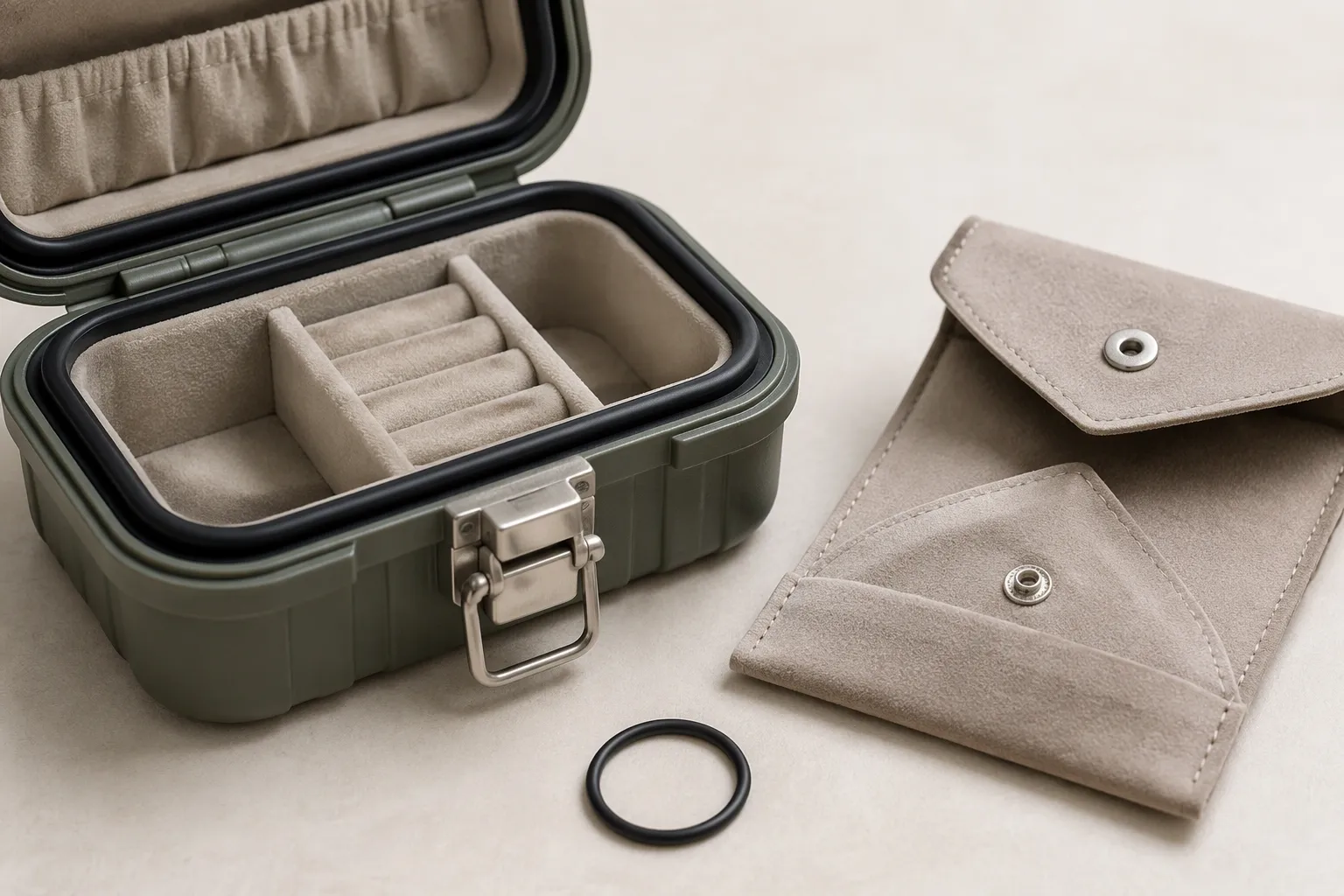
A gasket is a flat ring or sheet of rubber or silicone that sits in a channel around the lid. The lid presses down and squeezes the gasket flat. This design suits hard cases with wide openings, because the gasket follows the full perimeter of the rim. An O-ring is a round cord formed into a loop. It compresses into a groove and seals along a narrow contact line. O-rings perform best on small cases, tubes, and screw-top containers where space is tight. A compression latch pulls the lid down with force and holds it there. The latch does not seal on its own. It supplies the pressure that lets a gasket or O-ring do its job. Latches suit checked luggage and beach cases, where the lid must stay shut under stacking and handling.
Each part fits a different job. A wide hard case needs a gasket and a strong latch. A compact container needs an O-ring. None of these parts improves a case unless the lid closes evenly against it.
Snap Fastening And Everyday Seals
Everyday closures take a simpler path. The Travel Jewelry Pouch with Easy Snap Fastening from Shenzhen Tongxing Packaging Co., Ltd. uses a high-quality metal snap button. The button gives a secure, tactile click that tells the user the pouch has closed. It holds rings, earrings, and chains safely inside and resists light moisture, such as damp air or a small spill in a handbag. The envelope design folds over the contents, so the flap covers the opening and shields it from drips.
This closure serves a clear purpose. It secures contents and speeds daily use. It does not replace a gasketed hard-shell seal, and it does not claim to. A snap button leaves a seam where the flap meets the body, and water under pressure can find that seam. Travelers who expect immersion should choose a rated hard case. Travelers who want quick access and light protection get a good match here.
Buyers can inspect any seal before purchase. Check evenness first: the gasket or flap should sit flush around the whole rim with no lifted spots. Check fit next: the lid should close with firm, uniform resistance, not a loose snap on one side. Check serviceability last: a gasket that lifts out for cleaning or replacement extends the life of the case.
Travel Fit, Compliance, And Cost
Sizing For The Best Jewelry For Travel
Size decides how a case travels. A small pouch slides into a handbag pocket or a carry-on side pocket. A hard case takes up more room and often needs its own spot in a suitcase. Travelers should measure the space they plan to use before they buy.
The Tongxing Travel Jewelry Pouch with Easy Snap Fastening shows how a soft design makes good use of space. The envelope shape stays flat and light. A removable insert pad holds rings and earrings in slits and holes, and the pad keeps chains from tangling. Small, medium, large, and rectangular sizes hold different amounts. A traveler can carry one pouch for a weekend or several for a longer trip.
Compliance matters at the airport. Airline carry-on rules limit bag size and weight, so a light pouch leaves more room for other items. Security screening may ask travelers to remove metal objects, and a case with a metal snap or latch can cause a second check. A quick look at the airline's posted limits before departure avoids surprises.
What Price Tiers Deliver
Budget cases usually give basic splash resistance. A simple pouch with a snap closure protects against damp air and light spills. This tier fits short trips, everyday storage, and travelers who pack jewelry inside a larger bag.
Mid-range cases add better materials and tighter construction. A reinforced shell, a stitched flap, or a fitted gasket improves moisture control and makes the case last longer. This tier suits frequent travelers who want dependable protection without extra bulk.
Premium cases give rated seals, rigid shells, and gaskets that can be serviced. They fit beach trips, checked luggage, and harsh conditions. Each tier has a clear place. The best jewelry for travel matches the case to the trip, not to the price tag.
Four specs guide the purchase. The IP rating shows how much moisture a case can resist. The shell material sets weight, durability, and humidity control. The sealing mechanism keeps water away from the contents. Travel-fit factors cover size, portability, and airport rules.
A quick checklist helps before buying. Confirm the rating matches the trip type. Check that the material suits the expected conditions. Inspect the seal for even fit and serviceability. Verify the size and cost fit the traveler's needs.
The best jewelry for travel depends on the conditions ahead. Tongxing Packaging supplies cases and pouches across these tiers, so buyers can compare options on equal terms.
FAQ
Does a snap-fastening pouch keep jewelry dry in the rain?
A snap pouch resists damp air and light spills inside a bag. It does not seal against rain or immersion. Travelers who expect wet conditions should pair it with a watertight outer bag or choose a gasketed hard case.
What does the number after IPX actually tell a buyer?
The digit rates water protection under IEC 60529. A higher number means a tougher seal against water. It says nothing about dust, impact, or crush strength. Buyers should read the digit as one spec among several.
Which shell suits checked luggage best?
A rigid shell holds its shape under stacking and pressure changes. Aluminum and stiff polycarbonate both fit this role when the lid carries a gasket and a strong latch. Soft pouches suit carry-on use and light moisture instead.
How can a buyer test a seal before a trip?
Close the empty case and look for gaps around the rim. The lid should resist evenly on every side. A tissue placed inside then a light shake over a sink shows whether water reaches the interior.